Flooring · Engineered Timber
Engineered timber, done with care. Real wood, properly done.
To inspire beyond expectations.
What is engineered timber?
Engineered timber is real wood — a solid hardwood veneer (typically 0.6mm to 4mm thick) bonded to a stable plywood or HDF core. The top surface is genuine timber with grain you can feel; the core underneath gives the board the stability that solid timber doesn't have in Australian conditions. The result is a floor that looks, feels, smells, and ages like real wood — because it is — but doesn't shrink, swell, and split through summers and winters the way solid boards do.
That's what makes it the premium pick for forever homes. We can lay engineered timber as a floating floor (over underlay) or direct-stuck (glued straight to a properly-prepared concrete slab) — direct-stick gives you the most authentic underfoot feel, and it's worth the extra work for the right customer. We'll talk you through both at the measure.
Best Sellers
Our best-selling engineered timber
Our most popular planks in this range. Tap one to see colours and details.
Come into the showroom for the full range
We stock far more than we can show online — come see and feel the full range on Shearwater Drive.
Get directionsFrequently asked questions
Honest answer — engineered timber is the smarter choice for almost every Australian home, and here's why.
Solid timber is a single piece of hardwood, top to bottom. Looks beautiful, sands and refinishes many times. But solid timber moves a lot with humidity — Australian summers and winters can swing 30%+ in moisture content, and that means real cupping, gapping, squeaking and ongoing movement that no installer can fully prevent.
Engineered timber is the same hardwood surface — same look, same feel, same grain — but with a stable core underneath that resists the movement. You get the real-wood result without the maintenance headache. Most premium homes specified today use engineered timber, not solid, and that's by choice.
The only reason to choose solid over engineered is if you've got a 100-year-old heritage home where the existing floor is solid and you want a perfect match. Otherwise engineered timber wins on every count.
Engineered timber is genuinely a premium product. Real wood on top, properly engineered underneath, finished to last decades — there's no cheap version of doing it well. Customers spending engineered timber money are usually choosing it for a forever home, not a budget refit.
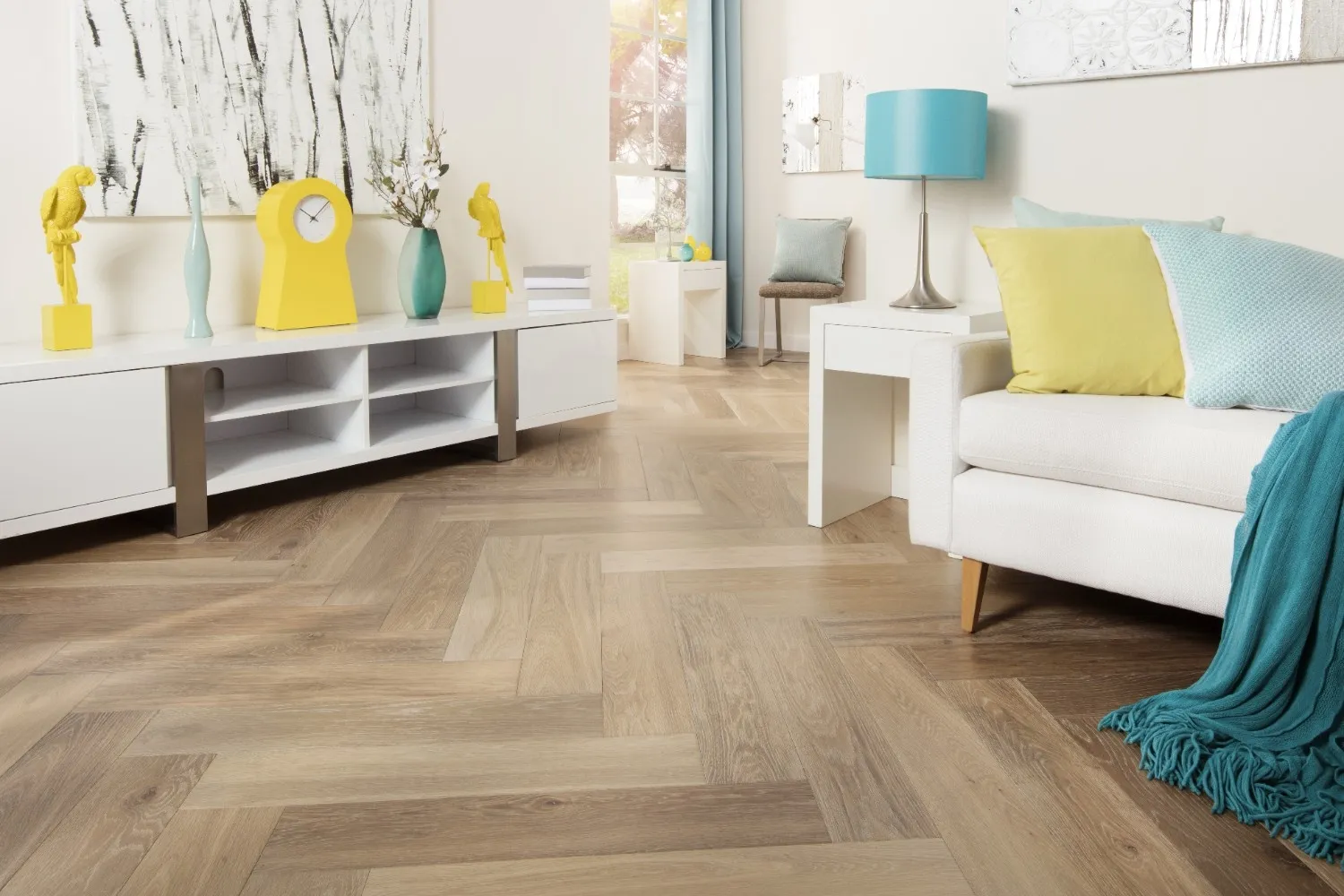
We'll work out install on-site after a proper measure. The product cost depends on the veneer thickness, the timber species (Australian hardwoods like Spotted Gum or Blackbutt sit at different price points to European Oak), and the board format (straight planks, herringbone, chevron). Herringbone and chevron are typically 20-30% more for the product alone and slower to install — but they're stunning, and they're often the reason someone chooses engineered timber over hybrid in the first place.
Come into the showroom and have a look. Bring photos. Take samples home.
Maybe — and we'll be straight with you about it. Engineered timber is more demanding on the subfloor than hybrid or laminate, especially if we're direct-sticking.
Concrete slabs need to be properly cured, level within tolerance, and free of moisture. We measure moisture content before laying any direct-stick job — if the slab's still releasing moisture, the install waits or we lay floating over a moisture barrier instead.
Existing timber subfloors usually need a quick level and sometimes a sand. Particleboard subfloors are fine for floating installs but won't take direct-stick.
If your existing flooring is still down, we can offer to lift it first so we can assess the subfloor properly at the measure stage. Otherwise we'll quote based on what we can see and flag anything once we're on site.
What we won't do: lay engineered timber over a bad subfloor and hope you don't notice. Get the foundation right or don't do the job.
Honest answer — for engineered timber, direct-stick over a proper concrete slab is the premium install. The boards sit tight to the subfloor, the feel underfoot is solid and authentic (no slight bounce like a floating floor), and there's no underlay between you and the timber.
Floating is the right answer when the subfloor is timber, or when there's a chance you'll lift the floor later (renovations, tenancies). It's also slightly faster to install.
For a forever home with a concrete slab, we'll usually recommend direct-stick. The job takes longer, the prep matters more, but the result is a floor that feels like the real thing it is — and that's what you're paying for.
Engineered timber installs take longer than hybrid or laminate — that's just the reality of the product. Direct-stick installs take longer still, because the glue needs working time and the boards need to be pressed properly into bed. Herringbone and chevron patterns add days too — they're a slower install by nature.
A typical single-room straight-plank engineered timber install is 1-2 days. A full-house direct-stick herringbone install can run a full week or more, depending on size. We'll give you a realistic timeframe with your written quote — not a sales-pitch number.
Yes — moving your furniture is included in every quote. Our installers shift the lounges, beds, wardrobes and pretty much anything else that needs to come up, and put it back when they're done.
There are a few items we don't move (some need a specialist, some need to stay where they are) — we'll explain anything specific when we come out for your free measure. The only things we ask you to handle yourself are fragile bits and pieces — vases, photo frames, electronics — which are safer in your hands than ours.
Every engineered timber we sell comes with a manufacturer's product warranty — typically 25 to 30 years for residential use, with some premium ranges going longer. The warranty document comes with your floor and we're happy to walk you through specifics.
Here's the bit that matters more, though: we warrant the installation for the life of the product. That's the whole reason to buy from us instead of finding an installer direct. Cheaper layers come and go — they're in town one year and gone the next. We've been on Shearwater Drive since 2001. When you pay us for the whole job — the floor, the underlay or adhesive, the prep, the install, the lot — the whole job is on us. One purchase, one number, one team responsible.
No — engineered timber doesn't belong in bathrooms, laundries, or anywhere that gets standing water. The top surface is real wood, and real wood plus standing water means cupping, swelling, staining, and eventually failure. That's not a flaw in the product — that's what wood is.
Kitchens are usually fine if you're sensible about spills (wipe them up promptly). But for any room where water is part of daily life, hybrid or vinyl planks is the honest answer. Most engineered timber customers are doing the rest of the house in timber and the wet areas in tiles or another product — and that's exactly the right call.
Yes — and this is one of the genuine pleasures of real timber.
Engineered timber is a natural product. It will mellow, deepen, and develop character as it ages, especially in sun-exposed rooms. Some species lighten slightly (Oak), some darken richly (Blackbutt, Spotted Gum). UV is the main driver, but normal household oils and the patina of years contribute too.
If you want a floor that looks identical in year 20 as it did in year 1, choose laminate or hybrid — they're stable, photographic prints that don't change. If you want a floor that becomes part of your home's character, engineered timber gives you that. Honest customers love it; customers expecting permanent factory-fresh look need to know going in.
Depends on the veneer thickness. A premium engineered timber with a 3-4mm wear layer can be sanded and refinished 2-3 times across its life — comparable to many solid timber floors. A budget engineered timber with a 0.6mm veneer can't be sanded at all without going through the wear layer.
If long-term refinishability matters to you, we'll point you at the thicker-veneer ranges. If you're more interested in look and lifestyle than 25-year refinishing, the thinner-veneer products are excellent value and still real wood.
Engineered timber is real wood and wants real-wood care.
Sweep or vacuum regularly (no rotating beater bar). Mop with a barely-damp microfibre mop and a timber-floor-specific cleaner — never soak the floor, and never use general household cleaners or steam mops. Felt pads under all furniture. Mats at every external door to catch grit. Wipe up spills immediately, especially anything coloured or acidic.
Every engineered timber manufacturer ships their own care guide — we hand it to you after install along with a follow-up call. Look after it sensibly and it'll repay you for decades.
Ready to get started?
Book a free in-home measure, or pop into the showroom for samples.
Book a free measure